
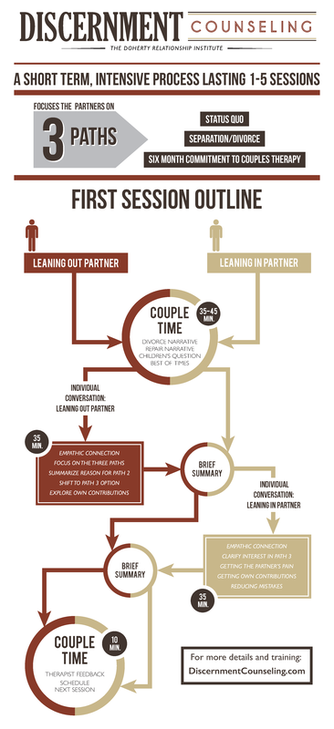
Discernment counseling is a short-term, structured therapeutic process for “mixed-agenda” couples on the brink of divorce, where one partner is “leaning in” to save the marriage and the other is “leaning out”. It aims to provide clarity and confidence regarding the future of the relationship—reconciliation, separation, or maintaining the status quo—rather than immediately fixing the marriage.
Key Aspects of Discernment Counseling
-
- Goal: To help partners decide whether to try to restore the marriage to health, move toward divorce, or take a timeout to decide.
- Structure: Typically lasts 1 to 5 sessions, often involving a mix of joint and individual conversations
- Neutrality: The counselor does not take sides or try to force a reconciliation; they support a, “better marriage” or a “better divorce”.
- Focus: It is not traditional couples therapy, as the focus is on decision-making rather than repairing the relationship.
- Outcome: Results in one of three paths: 1) Keep the marriage as is, 2) Move toward divorce/separation, or 3) Commit to a 6-month, “all-in” effort at reconciliation.
When It Is Not Suitable
Discernment counseling is generally not recommended if a partner is coercing the other, there is a threat of violence, or if one spouse has already firmly decided to divorce.
For more information and to see if Discernment Counseling is right for you, email me at drval@drvaleriesher.com.
Discernment Counseling was developed by Dr. William (Bill) Doherty, a renowned family therapist, professor at the University of Minnesota, and co-founder of the Doherty Relationship Institute.